


Noida's Mamura Fire Is a Wake-Up Call: Why Fire Sprinkler System Installation Can't Wait Anymore
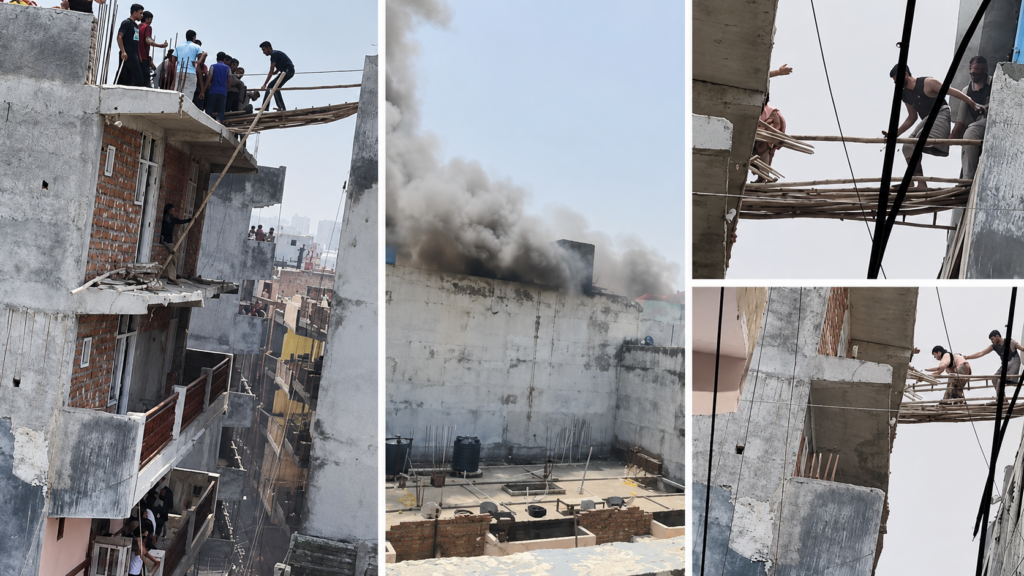
On July 16, 2026, a fire tore through a residential building in Mamura village, Sector 66, Noida. The blaze reportedly started while an electric scooter was charging on the ground floor. It spread to nearby petrol vehicles within minutes. Firefighters evacuated close to 50 families from the G+4 structure. Two residents lost their lives due to smoke inhalation before rescue teams could reach them.
The Uttar Pradesh Chief Minister’s office directed officials to speed up relief work. Investigators are still piecing together the exact cause. But one detail already stands out: the building had no sprinkler system to slow the fire down before it consumed an entire floor.
That single gap is the story behind this article. Not the fire itself, but everything that could have stopped it in its tracks.
Why EV Charging Fires Are Becoming a Real Problem in Indian Buildings
Electric vehicles are everywhere now, and that’s a good thing. Fewer emissions, lower running costs, quieter streets. But most Indian residential buildings weren’t designed with EV charging in mind. Parking areas built decades ago now host lithium-ion batteries charging overnight, often on shared circuits, with zero fire detection above them.
A few patterns show up again and again in these incidents:
- Charging happens in enclosed, poorly ventilated parking bays
- Wiring was never upgraded to handle the extra load
- Nobody’s monitoring the charging point once it’s plugged in
- There’s no smoke detector or sprinkler head anywhere near the vehicles
None of this is exotic engineering. It’s basic fire protection that got skipped somewhere between “let’s buy an EV” and “let’s actually check if our building can handle it.”
The Numbers Don't Lie: Sprinklers Change Outcomes
Here’s where things get less anecdotal and more mathematical. According to NFPA (National Fire Protection Association) research covering U.S. structure fires, civilian death rates in fires with sprinklers present were roughly 90 percent lower than in fires without any automatic extinguishing system. Fire spread stayed confined to the room of origin in about 94 percent of sprinklered fires, compared to roughly 70 percent when no sprinkler was present.
Translate that into plain language: a working sprinkler head buys you the ten or fifteen minutes that separate “contained kitchen fire” from “entire building evacuated at 2 a.m.” In the Mamura case, that gap was the difference between life and death for two residents.
India’s own building code backs this up. The National Building Code of India 2016, Part 4 (Fire and Life Safety), makes automatic sprinklers mandatory in basements larger than 200 square metres and in most buildings above 15 metres in height. Car parking areas, where EVs typically charge, fall squarely inside that requirement. Fire NOC approvals in most states now check for exactly this.
So the code already agrees with the numbers. The gap isn’t in the guidelines. It’s in enforcement, and in older buildings that were never retrofitted after the rules tightened.
Residential Fire Sprinkler Installation: No Longer Just a Factory Thing
For years, sprinkler systems were something you saw in warehouses and factories, not apartment blocks. That thinking is outdated. Residential fire sprinkler installation is now one of the fastest-growing categories of fire protection work in Delhi NCR, and incidents like Mamura explain exactly why.
A properly designed residential system covers:
- Basement and stilt parking, especially near EV charging points
- Common corridors and staircases
- Individual floors in high-rise apartment blocks
- Utility rooms and electrical panel areas
The cost of installing this upfront is nowhere close to the cost of what a society pays afterward: repairs, litigation, insurance disputes, and in the worst cases, lives that can’t be replaced.
Warehouse Fire Safety Services: A Different Beast Entirely
Warehouses carry their own risk profile. Dense storage, packaging materials, forklifts, and often round-the-clock operations mean a small fire can turn into a massive loss within minutes. Warehouse fire safety services need to account for rack height, storage commodity classification, and how quickly water needs to reach the seat of a fire stacked three or four levels high.
This is where a generic sprinkler layout falls apart. A warehouse storing electronics needs a different suppression approach than one storing textiles or chemicals. Getting this wrong doesn’t just fail an audit — it fails the moment a fire actually starts.
Industrial Sprinkler System Setup: Where Precision Matters Most
Industrial sprinkler system setup is a different level of complexity again. Manufacturing plants, pharmaceutical units, and chemical facilities deal with high-hazard occupancies where a standard wet-pipe sprinkler simply won’t cut it. These sites often need a mix of:
- Wet pipe and pre-action systems, depending on the area
- Clean agent suppression for server rooms and electrical panels
- Foam-based systems near flammable liquids
- Fire load calculations specific to the materials stored on site
This is engineering work, not a checklist. It needs a fire adequacy study before a single pipe goes in the ground, and compliance with standards like NFPA, FM Global, and India’s own NBC guidelines throughout design and installation.
Finding Local Fire Sprinkler Experts You Can Actually Trust
If you’re searching for fire sprinkler installers near me right now, you’re probably doing it for one of two reasons: a recent scare, or an upcoming Fire NOC renewal. Either way, the search results won’t tell you who’s actually good at the job.
Location matters more than people assume here. A local fire sprinkler expert who knows the Delhi NCR fire NOC process, the state-specific amendments to NBC 2016, and the region’s building patterns will spot problems that a distant, generalist contractor simply won’t.
A few things worth checking before you sign anyone up:
- Do they design the system in-house, or just install off a template?
- Can they show completed projects with named clients, not just stock photos?
- Do they offer AMC (Annual Maintenance Contracts), or disappear after handover?
- Are their materials OEM-certified with proper test documentation?
Skipping this checklist is how buildings end up with sprinklers that look fine on paper and fail the one time they’re actually needed.
Why Agnim Engineerz
This is where we’d like to talk about our own work, because frankly, this is exactly the gap we exist to close.
Agnim Engineerz has been designing and installing fire protection systems since 2017. Our head office sits right in Noida, and Delhi NCR is where we do most of our on-ground work — which means our teams already know the local Fire NOC process, the state amendments to NBC 2016, and the specific building patterns across Noida, Gurugram, Faridabad, and Delhi. We also take on projects pan-India, but being a local fire safety service provider is what lets us respond faster and design around real regional conditions, not textbook assumptions. We’re an EPC (Engineering, Procurement, Construction) company, which means we don’t just install what someone else designed — our team studies the site, runs the fire load calculations, designs the system, procures certified equipment, and installs it end to end.
Our work spans fire sprinkler system installation, fire hydrant systems, and clean agent and electrical panel suppression systems, built around NFPA, FM Global, and NBC standards. We’ve handled projects for Whirlpool of India, Bajaj Consumer Care, Orient Electric, Metso Outotec, and King Koil, across facility types ranging from manufacturing plants to warehouses to corporate offices.
What tends to bring clients back isn’t just the installation — it’s the AMC support afterward. Every sprinkler system needs testing, inspection, and upkeep to actually perform when a fire starts, and our teams stay on for exactly that, with 24/7 support built into every contract.
If your building, warehouse, or facility doesn’t have a proper fire sprinkler system yet — or if the one you have hasn’t been audited in years — that’s worth fixing before the next Mamura-style headline involves your address instead of someone else’s.
You can reach the team at agnimengineerz.com or call +91 93115 92629 for a site assessment.