


A fire doesn’t send an email to schedule itself. It shows up uninvited, spreads fast, and gives your factory or office exactly zero time to think. That’s why a working fire sprinkler system isn’t a compliance checkbox. It’s the one piece of equipment in your building that’s designed to fight back before your team even smells smoke.
Agnim Engineerz designs and installs fire sprinkler systems, fire hydrant systems, and complete fire fighting systems for industries across Delhi NCR — Delhi, Gurugram, Noida, Faridabad, Ghaziabad, and Greater Noida—and for clients across India. We’ve been doing this since 2017, and we still test every valve like it’s our own building on the line.
Why Industries Need a Fire Sprinkler System
Most industrial fires don’t start big. They start small: a spark near stored chemicals, an overheated motor, a short circuit in a warehouse full of packaging material. A fire sprinkler system reacts to heat within seconds and starts controlling the fire before it becomes a headline.
For industries like oil & gas, chemicals, pharmaceuticals, and consumer goods manufacturing, the stakes are higher. These sites often store flammable material, run heavy machinery, and operate round the clock. A fire protection system here isn’t optional; it’s the difference between a contained incident and a shutdown that costs weeks of production.
We’ve designed and installed sprinkler and hydrant systems for high-hazard facilities, including work with Whirlpool of India Ltd., Orient Electric, Bajaj Consumer Care Ltd., Metso Outotec, Dabur India, King Koil, and Better Sleep Solutions LLP. Every one of these projects came with its own compliance requirements and timeline pressures.
Understanding Fire Fighting Sprinkler Systems: How They Work
A fire sprinkler system is a network of water-filled pipes connected to sprinkler heads mounted along ceilings and walls. Each sprinkler head has a heat-sensitive element, usually a glass bulb or fusible link that reacts only when the temperature around it crosses a set threshold.
Here’s the part people get wrong in movies: sprinklers don’t all go off together when one fire alarm rings. Each sprinkler head activates individually, only in the area where heat is actually detected. So if a fire starts in one corner of your warehouse, only the sprinklers above that corner respond; your inventory two aisles away stays dry.
Behind the sprinkler heads sits the real workforce: a pump house, a reliable water source, control valves, and pressure-monitoring devices. According to the National Fire Protection Association (NFPA), sprinkler systems have been in documented use for well over a century and remain one of the most effective tools for controlling fires in their early stages.
Which Type of Fire Sprinkler Is Right for Your Business?
Not every building needs the same system. The right choice depends on your industry, temperature conditions, and fire risk.
Wet pipe systems keep water in the pipes at all times, ready to discharge the moment a sprinkler head activates. These suit most commercial and industrial spaces with stable temperatures.
Dry pipe systems hold pressurized air instead of water until a sprinkler activates. These work well in unheated warehouses, parking structures, or cold storage areas where water in the pipes could freeze.
Pre-action systems need two triggers—a detection signal and heat at the sprinkler head—before water is released. These are common in data centers, archives, and areas with sensitive equipment, where accidental discharge would be expensive.
Deluge systems open all sprinkler heads on the line at once, delivering water to an entire section instantly. These are built for high-hazard zones like chemical storage or fuel handling areas, where a fire needs to be hit hard and fast.
What Are the Four Types of Fire Protection Systems?
A complete fire protection system usually rests on four pillars:
- Fire detection and alarm systems — smoke detectors, heat detectors, and manual call points that catch the first sign of trouble.
- Fire suppression systems — sprinklers, water mist, foam, or clean-agent gas systems that actively fight the fire.
- Fire hydrant systems — external and internal hydrant networks that give firefighters a direct water supply during an active fire.
- Passive fire protection — fire-rated walls, doors, and dampers that slow the spread of fire and smoke, buying time for evacuation.
Most industrial facilities need all four working together. A sprinkler without a detection system is slow to react. A hydrant without proper pipe sizing runs dry when you need it most. We design these as one integrated system, not four separate boxes to tick.
Beyond Sprinklers: Other Fire Suppression Systems We Install
Water isn’t always the right answer. Server rooms, control panels, and archives don’t react well to a soaking, even if the alternative is a fire. That’s where a clean agent suppression system earns its place; it puts out the fire with a gas that leaves electronics and documents untouched.
Within clean agent options, the NOVEC 1230 fire suppression system and the FM200 fire suppression system are the two most widely used in data centers and control rooms across Delhi NCR. Both discharge in seconds and don’t leave residue behind, which is exactly what a server rack needs.
For facilities that want fire control without the risk of water damage to machinery or finished goods, a fire water mist system is worth a look too. It uses far less water than a conventional sprinkler, delivered as a fine mist that cools and suppresses fire while limiting runoff.
We design and install all of these alongside standard sprinkler and hydrant systems, so your facility gets the right suppression method for each zone, not one blanket solution for every room.
Our Fire Sprinkler Installation Process
Every project follows a structured process, because guesswork has no place in fire safety. Here’s what happens between the first site visit and the day you get a working system:
- Site survey and hazard assessment — we study your building layout, occupancy, and stored materials to classify the fire hazard level and shape the initial design.
- Review approved drawings and specifications — before any material moves, our execution team studies the approved drawings, BOQ, and specifications to confirm scope, pipe routing, and installation requirements.
- Material procurement and site inspection — we procure approved materials as per project specifications and inspect every batch on arrival for quantity, quality, and physical damage, so nothing substandard makes it into your system.
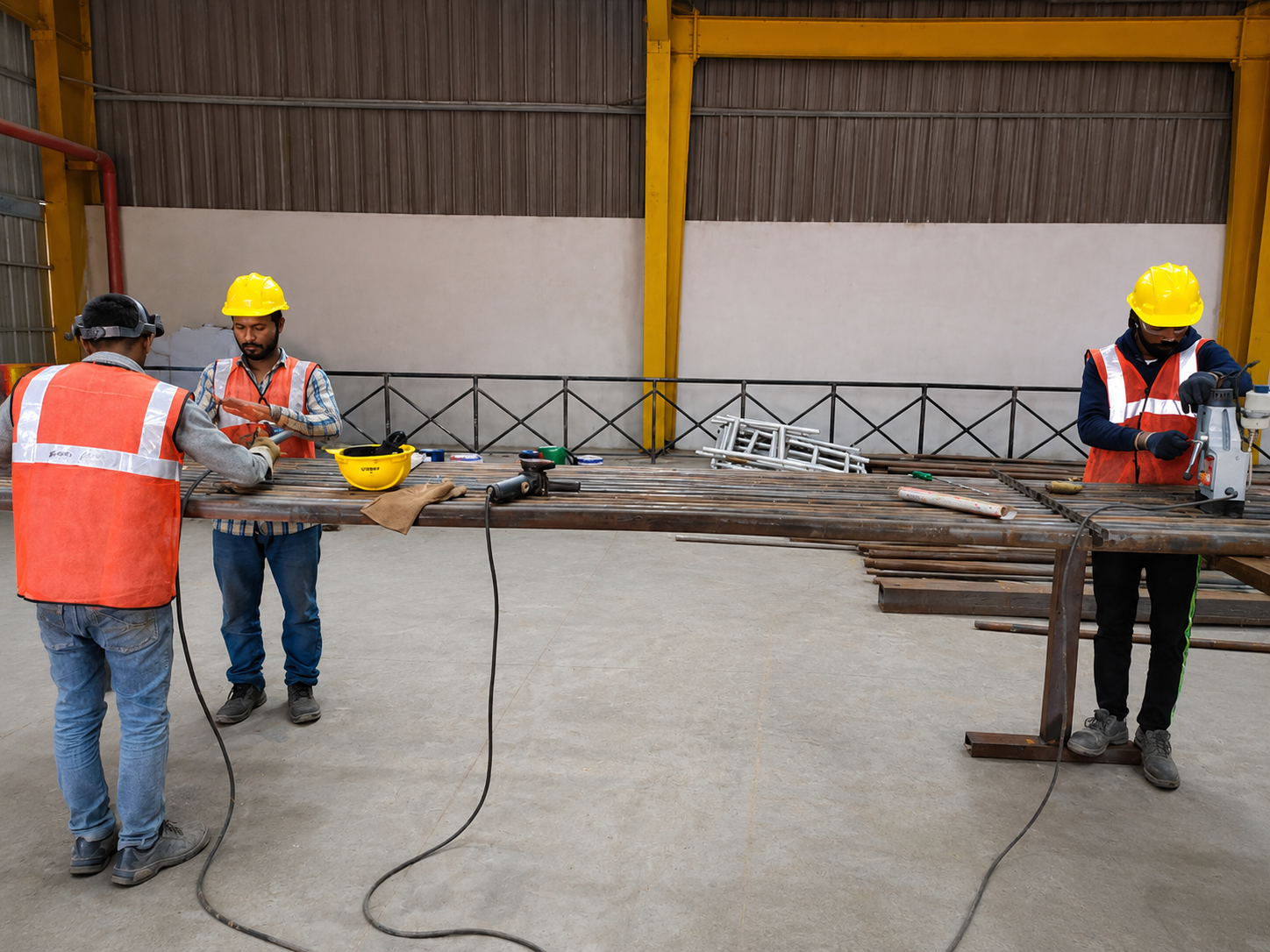
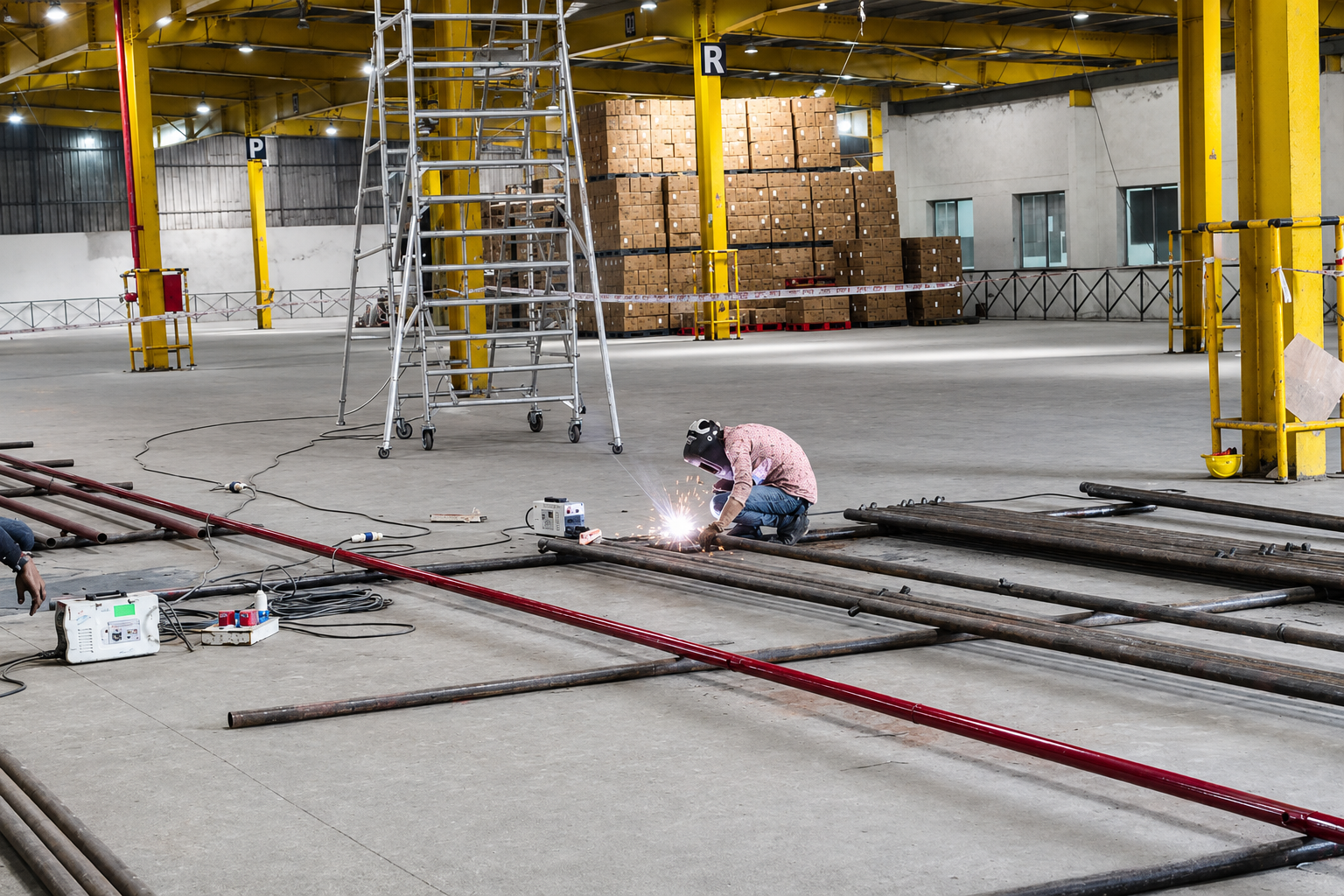
- Pipe fabrication and painting — pipes are cut, grooved, threaded, or welded as required, then primed and painted to specification before installation.
- Pipe supports and hangers — supports and hangers go up at approved locations and spacing, so the piping stays aligned and properly secured for the life of the system.
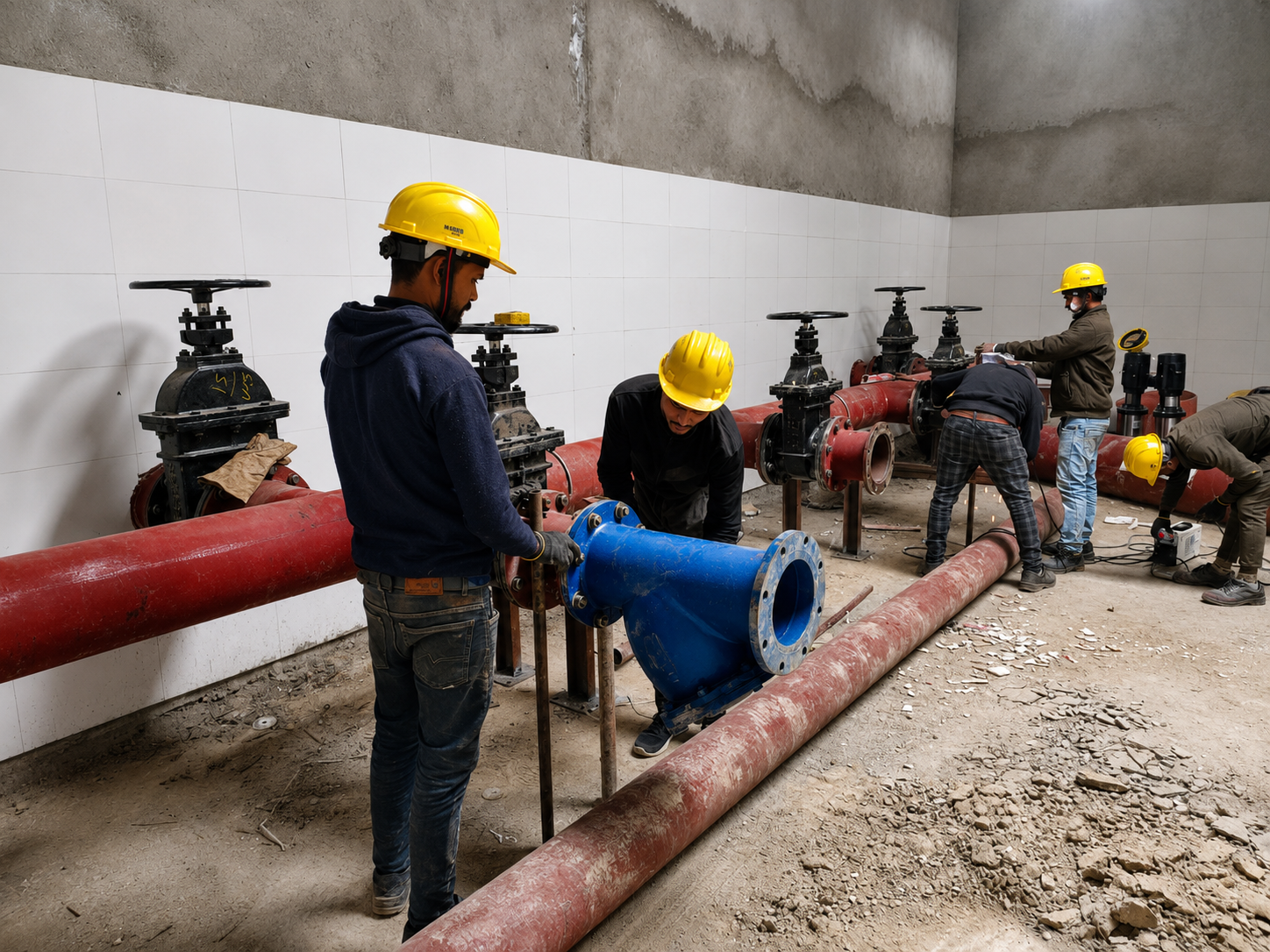
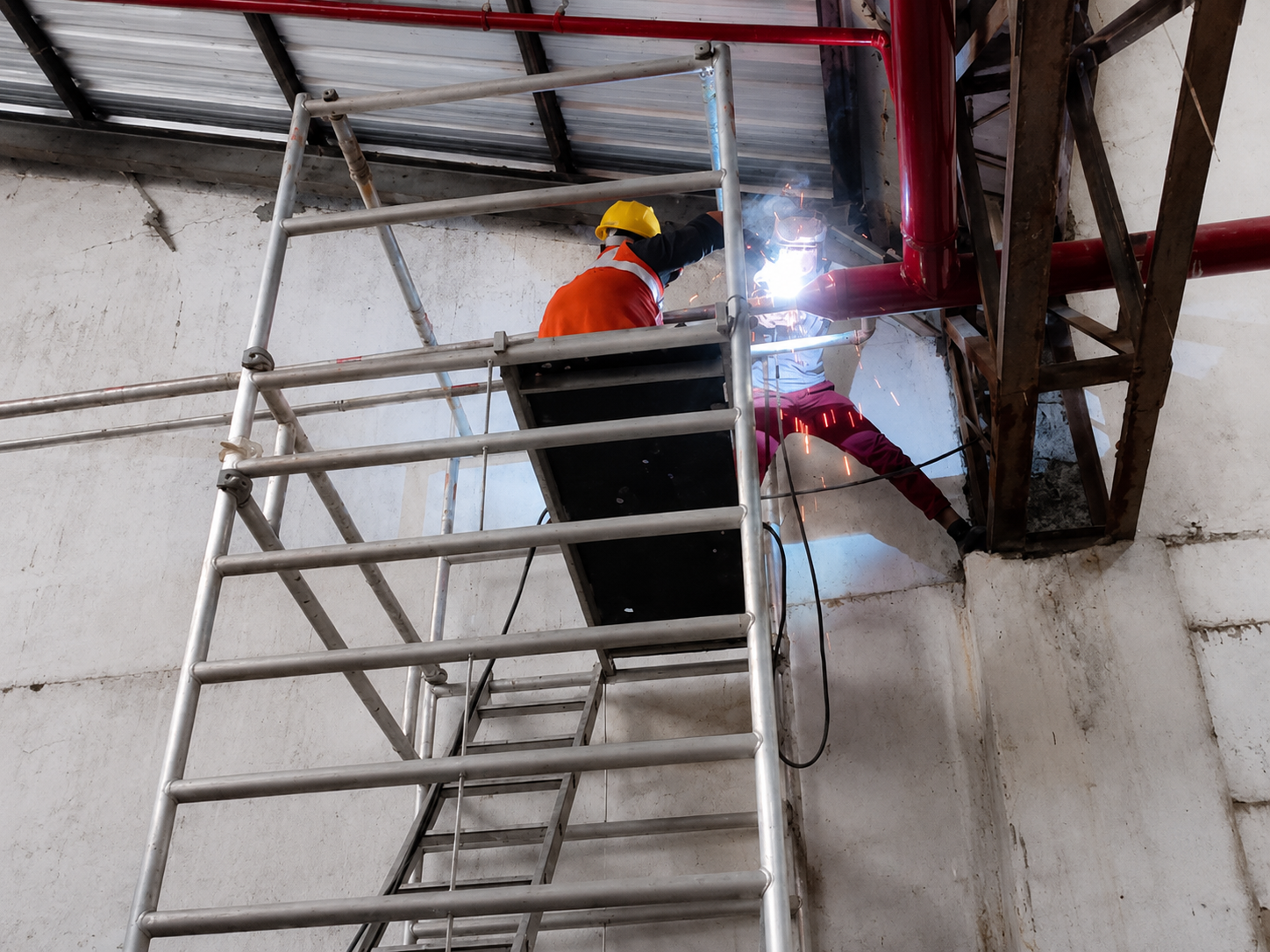
- Mains, branch lines, valves, and fittings — all piping, valves, and fittings are installed as per the approved drawings, with workmanship checked at every joint.
- Sprinkler head installation — sprinkler heads go in only after piping is complete, matched to the correct type, temperature rating, and orientation for full coverage.
- Hydrostatic pressure testing — the system is pressurized as per project specification to check every joint and fitting for leaks before it’s trusted to hold water under real fire conditions.
- Functional testing and commissioning — we test the complete system end to end, including alarm valves, flow switches, and fire pump operation, to confirm it actually works the way it’s meant to.
- Final inspection and rectification — a final quality inspection catches any punch points or defects, which get corrected before the project is considered complete.
- Documentation and handover — test reports, inspection records, and as-built drawings are handed over along with the system, once you’ve signed off on the final result.
- AMC and ongoing support — we offer annual maintenance contracts with scheduled testing, so your system stays ready on day 1,000 the same way it was on day one.
Site Photos: Fire Sprinkler System Installation in Progress
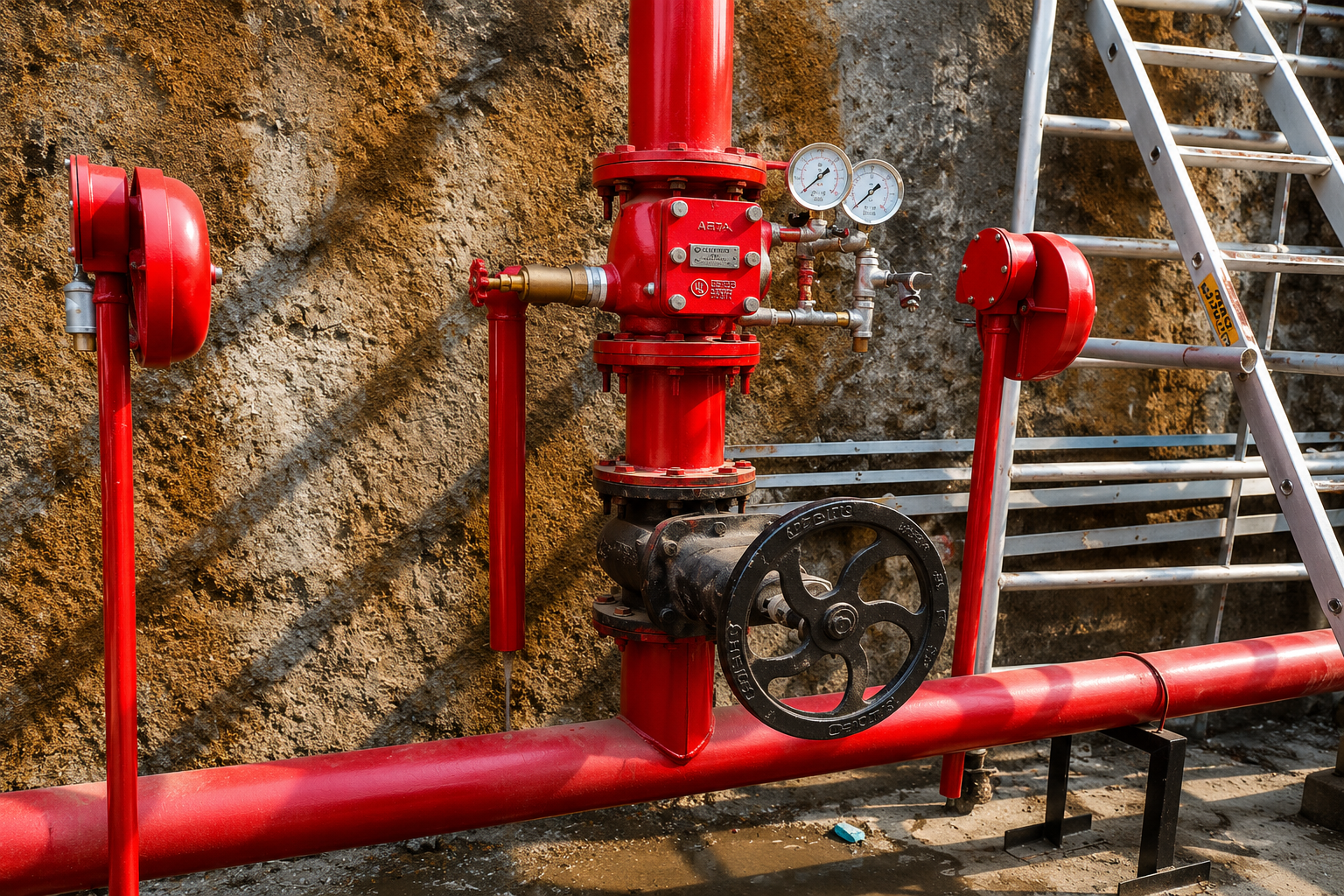
What Is the Cost of a Fire Sprinkler System?
Honestly, there’s no single number here, and any website that gives you one flat figure is guessing. Cost depends on your building’s fire hazard classification, floor area, number of sprinkler heads, pump capacity, pipe material, and whether you need a new pump house or can use an existing water source.
What we can promise is a transparent quote after a proper site assessment, no vague estimates, no hidden line items after installation begins.
Why Choose Agnim Engineerz
Agnim Engineerz was founded in 2017 by Ankur K Trivedi, and it remains one of the few companies that integrates fire safety directly into the design and installation of fire hydrant systems, rather than treating design and execution as separate jobs handled by separate vendors.
Our management team brings over 20 years of experience from international EPC projects, and that experience shows up in how we train our own site teams. We’ve designed and installed systems for high-hazard sectors — oil & gas, chemicals, pharmaceuticals, engineering, and consumer goods — where a design mistake isn’t a minor fix, it’s a rebuild.
Clients including Whirlpool of India Ltd. have worked with us on projects that combined detection, public address systems, and hydrant lines into one compliant, delay-free installation. Others have trusted us to design sprinkler systems specifically for hazardous storage areas, with pump room installations completed ahead of schedule.
Here’s what backs that experience up on every project we take on:
- Certified and genuine materials from top OEMs — no substitutes, no unverified sourcing, just components that meet the standard the design calls for.
- Fast project delivery with standard corporate payment terms — built to fit how large industrial clients actually run procurement and finance.
- Trained safety supervisors on every project — someone on-site whose job is safety compliance, not just installation speed.
- Expert design and installation teams — the same team that designs the system also installs it, so nothing gets lost in translation between drawing and execution.
- Technical expertise on FM Global, NFPA, and NBC standards — designs that hold up to international and national code requirements, not just local approval.
- Pan-India project delivery with uniform quality — a facility in Noida and a facility in Pondicherry get the same standard of workmanship.
- 24/7 support backed by dedicated service teams — fire safety doesn’t take weekends off, and neither does our support.
- Trusted by India’s largest multi-location industries — the kind of clients who audit vendors hard before signing off, and keep coming back after.
Fire Sprinkler Installation Near You — Delhi, Gurugram, Noida & Faridabad
We serve industries across Delhi, Gurugram, Noida, Faridabad, Ghaziabad, and Greater Noida, with project experience extending across India, including facilities in Sonepat and Pondicherry.
Working with a local team has real advantages. A fire sprinkler system needs periodic testing, valve inspections, and quick response if a component needs replacement. A contractor based in Delhi NCR can be on-site the same day, not three days after a support ticket gets escalated.
Local teams also understand regional fire NOC requirements and know which authorities to coordinate with for approvals in each city — something an out-of-state vendor typically learns on your project, at your expense.
The Real Benefits of Having a Fire Sprinkler System
A properly installed fire sprinkler system does more than sit quietly on your ceiling waiting for a fire that (hopefully) never comes.
- It reacts in the first minutes of a fire, when suppression is easiest and damage is smallest.
- It reduces the load on your fire alarm and evacuation plan by controlling the fire directly.
- It protects your machinery, inventory, and downtime — a contained fire means your production line is back up in days, not months.
- It’s often required for fire NOC compliance and insurance terms, so it protects your paperwork as much as your building.
Frequently Asked Questions
Secure Your Business with Nearby Fire Safety Experts
A fire sprinkler system is one of those investments you hope you never have to rely on, but the day you do, you’ll be glad someone designed it properly. Since 2017, Agnim Engineerz has been designing, installing, and maintaining fire sprinkler and hydrant systems for industries that can’t afford to get this wrong.
If your facility in Delhi, Gurugram, Noida, or Faridabad needs a fire sprinkler system installed, upgraded, or audited, our team is a phone call away, not a three-day wait.
Let’s Start Work
Together
Please feel free to contact us. We will get back to you with 1-2 business days. Or just call us now.